
A new agreement linking Turkish environmental research with London’s climate finance and policy network is set to sharpen commercial interest in the circular economy sector ahead of Türkiye’s hosting of COP31. For businesses tracking where regulatory and investment momentum in resource efficiency is heading, the tie-up signals that London will remain a central node even as the diplomatic spotlight shifts eastward.
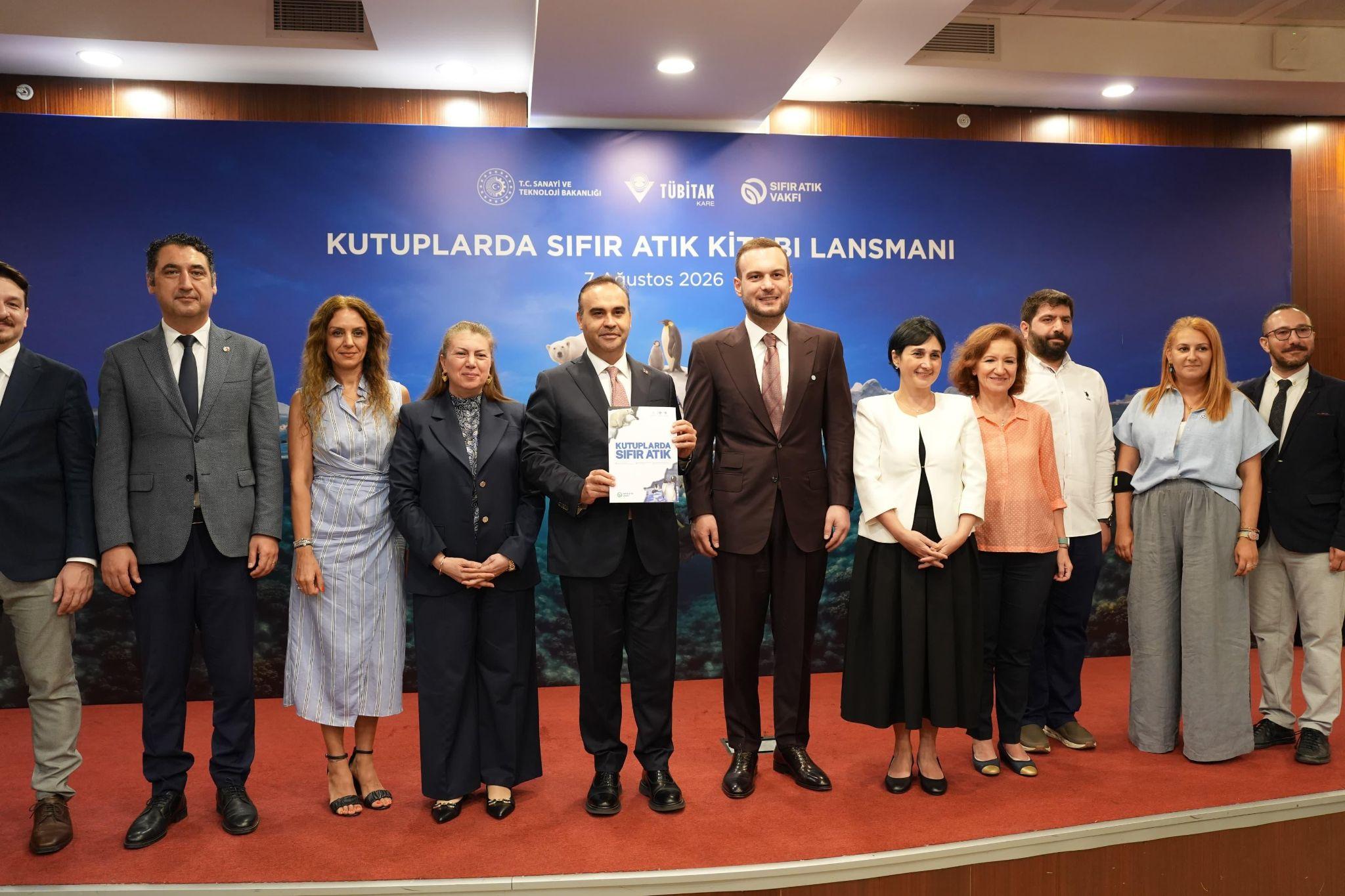
The partnership was struck between The Zero Waste Foundation, the Turkish body driving the country’s zero waste agenda, and London Climate Action Week (LCAW), the annual gathering that draws together government, finance, industry and civil society figures from across the climate sector. The cooperation protocol, covering climate action, zero waste and circular economy collaboration, was signed on 17 August, ten days after the Foundation published a book examining zero waste principles in polar research.
For companies operating in waste management, materials science, logistics and sustainable manufacturing, the arrangement is a marker of intent rather than a set of immediate contracts. It formalises knowledge exchange and joint initiatives between the two organisations, with both sides pointing to COP31, which Türkiye will host, as a natural staging point for further engagement. That gives firms with interests in either market a concrete date against which to plan participation, partnerships or product positioning.
A commercial rationale behind the science
The book at the centre of the announcement, “Zero Waste in the Polar Regions”, was produced with TÜBİTAK’s Polar Research Institute and brings together 18 articles from scientists who have worked in the Arctic and Antarctic. While the subject matter sits far from most boardrooms, the underlying methodology has direct commercial relevance: the publication focuses on reducing waste before it is generated, using materials and resources efficiently, and managing energy, water and logistics with minimal environmental footprint.
Those are the same operational questions facing manufacturers, logistics providers and resource-intensive industries under growing regulatory pressure to cut waste and emissions. By applying zero waste thinking to one of the most logistically demanding research environments on the planet, the Foundation is effectively producing a stress-tested case study in resource efficiency that could inform practice in far more conventional commercial settings.
Mehmet Fatih Kacır, Minister of Industry and Technology of Türkiye, framed the publication as the convergence of two long-running national programmes. “The Zero Waste initiative launched under the leadership of H.E. Emine Erdoğan has grown step by step from a national initiative into a global one,” he said. He added: “At the same time, we began organising scientific expeditions to Antarctica and the Arctic under the auspices of the President of the Republic of Türkiye, enabling Turkish scientists to strengthen the country’s presence in polar research. Through this book, these two initiatives have come together.”
That framing matters for businesses assessing Türkiye’s industrial policy direction. A government minister explicitly linking scientific infrastructure investment to a waste-reduction agenda suggests the zero waste programme, which has already scaled from domestic policy to an international movement under the wider vision advanced by Emine Erdoğan, Founder of the Zero Waste Movement and Chair of the UN High-Level Advisory Board on Zero Waste, is being treated as a strategic economic asset rather than a purely environmental one.
London’s role as a connective hub
The protocol was signed by Samed Ağırbaş, President of the Zero Waste Foundation and COP31 High-Level Climate Champion, and Nick Henry, Climate Action Founder and CEO. “After this cooperation protocol, I hope we will carry out strong work and organize joint events at COP31 and London Climate Action Week,” Ağırbaş said.
LCAW’s draw for a business audience lies in its breadth: it brings together government, cities, business, finance, academia, civil society and local communities under one umbrella. For Türkiye’s circular economy sector, formal access to that network offers a route to investors, corporate partners and policy contacts that a purely domestic programme would struggle to reach. For UK and international firms, it offers a more direct line into Turkish expertise on resource efficiency, zero waste infrastructure and polar research logistics, an area of growing interest as extreme environments become test beds for broader sustainability practice.
Crucially, the agreement is structured as an institutional partnership rather than a one-off event tie-in, meaning the exchange of knowledge and joint initiatives is intended to continue beyond any single conference cycle. That continuity is likely to appeal to businesses wary of climate partnerships that generate headlines but little sustained follow-through.
COP31 sharpens the timeline
Türkiye’s hosting of COP31 gives the London partnership a firm horizon. While the immediate work between the Foundation and LCAW is described as practical exchange rather than a formal COP31 programme, both organisations have signalled an intention to organise joint events around the summit. That creates a planning window for businesses in construction, manufacturing, waste services and finance who may want to align product launches, partnership announcements or sustainability reporting with the period around the conference.
The broader signal for a business readership is one of positioning rather than immediate transaction. Türkiye is using scientific credibility, built through initiatives such as its polar research programme, to reinforce a policy narrative around zero waste and circular economy leadership, while simultaneously securing a foothold in London’s climate finance and policy ecosystem ahead of hosting COP31. Companies with exposure to either the Turkish or UK sustainability sectors now have a clearer sense of where institutional attention, and potentially procurement and investment activity, is likely to concentrate over the coming year.
None of this guarantees specific commercial outcomes, and the agreement itself is explicit that it should not be read as reducing zero waste to recycling or waste management alone. But for a business audience assessing where circular economy policy momentum is building internationally, the combination of a formal London partnership and a fixed COP31 deadline gives Türkiye’s zero waste agenda a concrete and time-bound platform.